
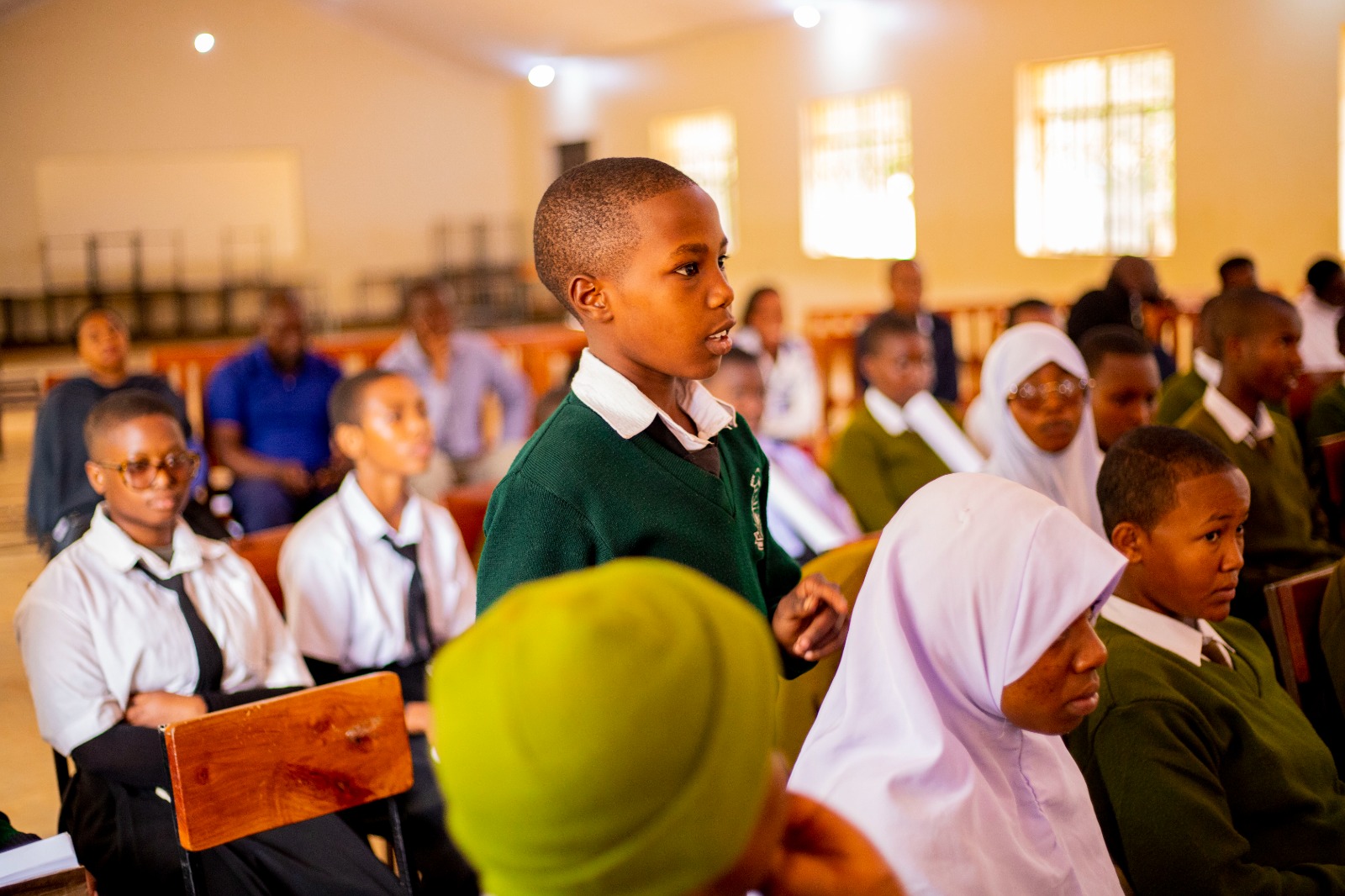
“How can we help our fellow student when they receive excessive punishment?” This question, raised by a student, transformed the direction of the Interschool Dialogue held in Babati Town (Manyara) and Korogwe (Tanga) districts.
This platform provided a unique opportunity for students to meet, exchange ideas, and deeply discuss issues regarding child protection and safety at school—with excessive corporal punishment being highlighted as one of the main forms of violence they encounter.
Government Emphasizes Guidelines for Teachers and Students
Responding to the issue, the Primary Education Officer for Babati Town Council, Ms. Elitruda Kashuku, urged teachers to strictly follow laws and procedures governing student discipline to ensure schools remain safe environments.
To support students, she urged them to use official channels to report violence whenever they or their peers face abuse:
- Dropping messages into the “Sauti Yangu” (My Voice) suggestion box
- Calling the toll-free child helpline at 116 without fear.
Students Take Action as Child Protection Ambassadors
The dialogue empowered students from 10 primary and secondary schools implementing the Gender and Education Transformative (GET) project to become ambassadors for change by taking the following actions:
- Breaking the Silence: Encouraging students not to report violence out of fear, even if the suspect is a teacher or a person of authority in the school or community.
- Communication Channels: Emphasizing the use of the “Sauti Yangu” suggestion box, calling 116, and ensuring every student has contact numbers for their teachers, parents, or guardians.
- Self-Protection: Educating peers to avoid isolated and high-risk areas.
- Student Leadership: Urging student governments to actively participate in tracking and reporting abuse cases.
- Freedom of Expression: Requesting greater freedom of expression and inclusion in all decisions affecting them.
Through these dialogues, we continue to build the voice of the child and create safe learning environments where every child is protected, heard, and respected.